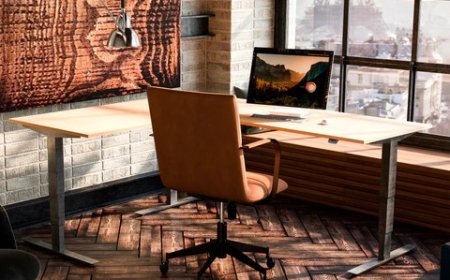
Why choosing ergonomic chairs helps prevent long hours of discomfort and spinal strain


While selecting a chair seems like a simple decision, when you spend hours at a desk, that choice directly affects your posture, comfort, and spinal health. You may have experienced sharp twinges or dull aches after too much sitting. These discomforts are not haphazard; they result from prolonged strain caused by poor posture. One actually needs a solution that addresses production as well as physical well-being. Understanding how proper support can prevent this discomfort directly leads to a demand for more appropriate chair choices.
Understanding How Prolonged Sitting Harms Your Spine and Muscles
Extended periods of time spent in seats without proper support can silently lead to bad posture and spine issues. Although you may not notice it immediately, the daily tension places unnecessary pressure on your muscles and joints. When using a hard or flat-backed chair, the spine begins to compress or misalign because it is not properly supported in its natural curve that assists with body weight.
Especially in the lumbar area, your back muscles work extremely hard to support your spine. This makes one exhausted and depressed at last. Often causing rounded forward shoulders, bad sitting posture tightens the chest and weakens the muscles of the upper back. This mismatch makes you more rigid and reduces your range of motion.
Especially in the hips and lower legs, excessive sitting also restricts blood flow. Tingling or numbness when circulation drops suggests that your body is suffering from incorrect posture. Such discomfort can advance over months and years to either chronic pain or possibly permanent spinal misalignment.
How Posture-Friendly Design Improves Physical Endurance?
A chair that accommodates the natural curves of the body helps one to stay comfortable and energetic. Constant support for the lower back as well as for the hips, upper spine, and shoulders is the secret. When you sit straight, feet flat, knees aligned with your hips, the spine loads evenly.
By letting you change your seated position, adjustable lumbar support, seat depth, and reclining backrests help you to fit your specific body type. This promotes active sitting, which, without tiring you, gradually exercises your core muscles to maintain balance and posture. Such activity preserves spinal integrity and over time lessens muscular weariness.
Correct-height armrests help reduce shoulder tension. By unloading weight from the arms and preserving their neutral angle, these components help to prevent the habitual hunching that often results in neck pain and shoulder stiffness. By reducing muscular tension and increasing oxygen flow through better circulation, these posture-friendly adjustments taken together increase endurance.
Why Investing in Ergonomic Chairs Supports Long-Term Well-Being?
Poor posture may go unnoticed until your body starts exhibiting symptoms of discomfort. By the time you start to feel pain, spinal strain has already begun. Stopping this tension needs proactive measures and seating that complements rather than opposes your body. This is exactly where ergonomic chairs really shine.
The basis of these chairs is anatomical support. They allow for customisation, as opposed to a universal solution. You can tilt the seat forward, raise or lower the height, or modify the backrest to fit the specific curve of your spine. This technique reduces tension on the lumbar vertebrae and maintains your posture as normal.
Reducing pain enables you to focus better. You work longer without constantly moving or feeling physically distracted. This gradually helps reduce tiredness, fewer headaches, and even improved mood. Your general efficiency, drive, and energy can all change depending on one finely tuned chair. Although it appears to be a physical product, it actually functions as a wellness tool.
How Poor Sitting Habits Can Be Reversed with Correct Support?
Although the body is quite adaptable, it usually adapts negatively if conscious correction is not applied. Unsupportive chairs help accentuate slouching, crossing legs, or leaning towards screens. These techniques affect your breathing pattern and even help define your spine's posture. Starting with comfortable sitting will help you correct your natural posture. Sitting with the hips somewhat above the knees and a slightly bent spine helps release tension, strengthen weak muscles, and stabilise the pelvis.
Over time, your brain rewires its postural memory to enable easy posture improvement. Ergonomic chairs make this procedure feel natural by levelling the body and aligning the pelvis. Better spinal alignment not only reduces daily physical stress but also enhances cognitive and respiratory capacity. Changing traditional furniture with supportive chairs helps correct negative habits and increases lifetime comfort and strength.
Conclusion: A Supportive Chair Choice Leads to Better Days Ahead
Purchasing tools that protect your physical health is not only necessary but also more than a luxury; comfort, support, and concentration significantly influence your daily life. As you have seen, extended sitting can reduce your energy and affect your spinal condition. You have also discovered that a body-friendly design is practical and not difficult to achieve. Making wise decisions now will help you prevent months or years of suffering. Even if it appears like a small improvement, one chair may affect your workspace as well as your attitude, conduct, and emotions. Consider Ergo Desks for bespoke solutions supporting your long-term health if you're ready to increase posture and output.